

In today’s business world, competition is fierce and the need to stand out is greater than ever. Without the right branding materials, even the most innovative companies can struggle to build trust and recognition.
Branding materials are more than just logos or business cards. They are the foundation for creating a memorable identity, fostering loyalty, and driving real results as we move into 2026.
This article reveals the 12 must-have branding materials every ambitious business needs to thrive. Discover proven essentials, from digital assets to print collateral, that can elevate your brand and set you apart in a crowded market.
The Evolving Importance of Branding Materials in 2026
In 2026, the business world is more interconnected than ever, and branding materials have taken on a new level of significance. As customer journeys span websites, social platforms, packaging, and physical spaces, brands must deliver a seamless experience at every touchpoint. Omnichannel branding is no longer just a buzzword; it has become a necessity for building trust and recognition.
Consistency is king. According to recent industry research, 89% of consumers remain loyal to brands that reflect their values and maintain a cohesive image. This means branding materials are not just decorative; they are essential tools for building long-term customer relationships. When every asset, from logos to packaging, aligns visually and tonally, audiences feel reassured and connected.
First impressions still matter deeply. The quality and professionalism of branding materials influence whether a potential customer chooses to engage or look elsewhere. For example, a well-designed business card or website instantly signals credibility. In fact, studies show that 94% of first impressions are design-related. This highlights why businesses cannot afford to overlook the smallest details in their branding materials.
Personalisation has become a defining trend. Customers expect brands to speak directly to them, whether through tailored email signatures, unique merchandise, or interactive digital brochures. At the same time, sustainability is no longer optional. Eco-friendly inks, recycled paper, and biodegradable packaging are fast becoming standard for forward-thinking branding materials. These practices not only reduce environmental impact but also align with consumer values.
Market leaders demonstrate the power of distinctive branding materials. Apple’s minimalist packaging and product design, or Innocent Drinks’ playful labels and consistent messaging, showcase how cohesive branding can drive recognition and market dominance. Their approach proves that memorable branding materials are a strategic asset, not just a marketing expense.
Technology is transforming the landscape. Interactive business cards with NFC chips, AR-enabled packaging, and dynamic digital signage are redefining what branding materials can achieve. Brands are now exploring AI-driven content and immersive experiences to deepen engagement. The future will see even more convergence of digital and physical assets, requiring brands to stay agile and innovative.
Visual trends are also evolving quickly. Brands must keep pace with emerging colours, fonts, and design styles to remain relevant. For a deeper look at what is shaping the next wave of branding materials, see these Visual Branding Trends 2026.
Ultimately, investing in high-quality branding materials is a strategic decision. It is about more than just aesthetics; it is about creating trust, fostering loyalty, and driving measurable results. Businesses that treat their branding materials as a core asset will be best positioned to thrive in 2026 and beyond.
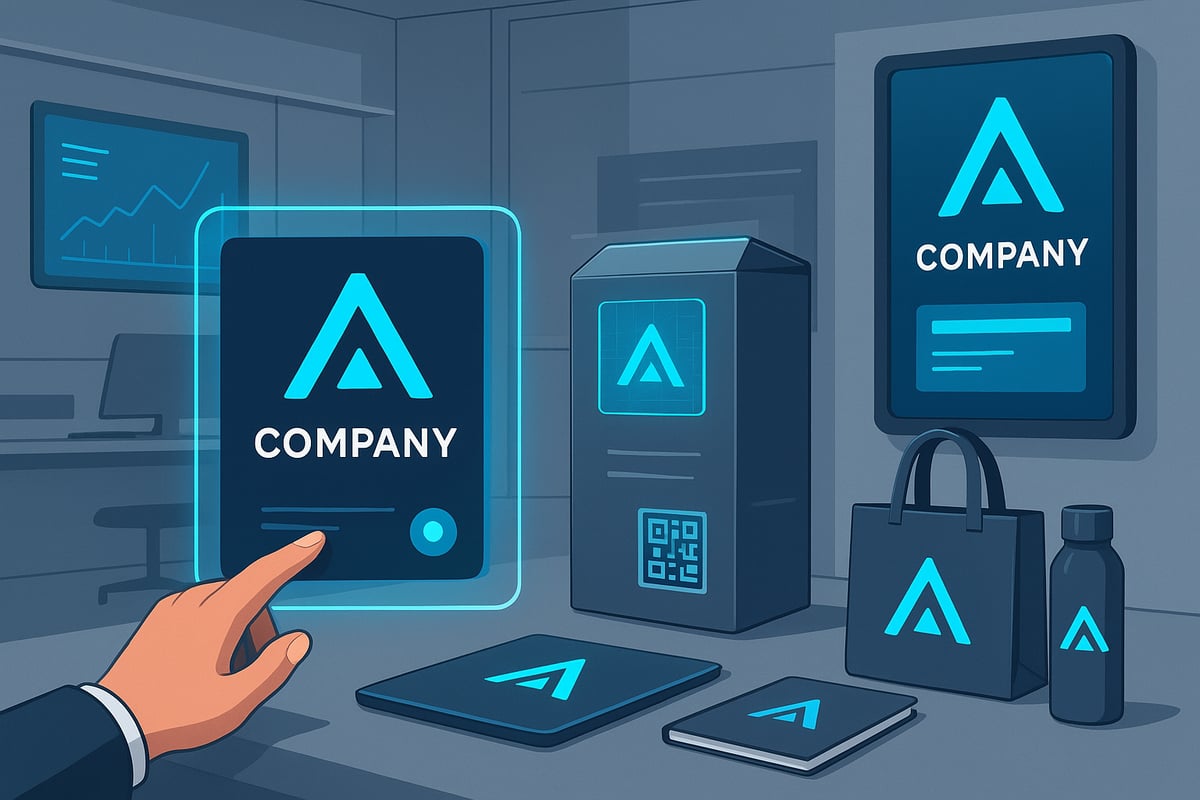
12 Must-Have Branding Materials for Business Success in 2026
In 2026, the right branding materials are your ticket to business growth and recognition. The landscape is evolving fast, and only those businesses with a robust suite of branding materials will stand out, foster loyalty, and drive results. From digital assets to tactile print items, each element plays a crucial role in presenting your brand to the world. Below, explore the 12 essential branding materials every ambitious business needs to succeed.
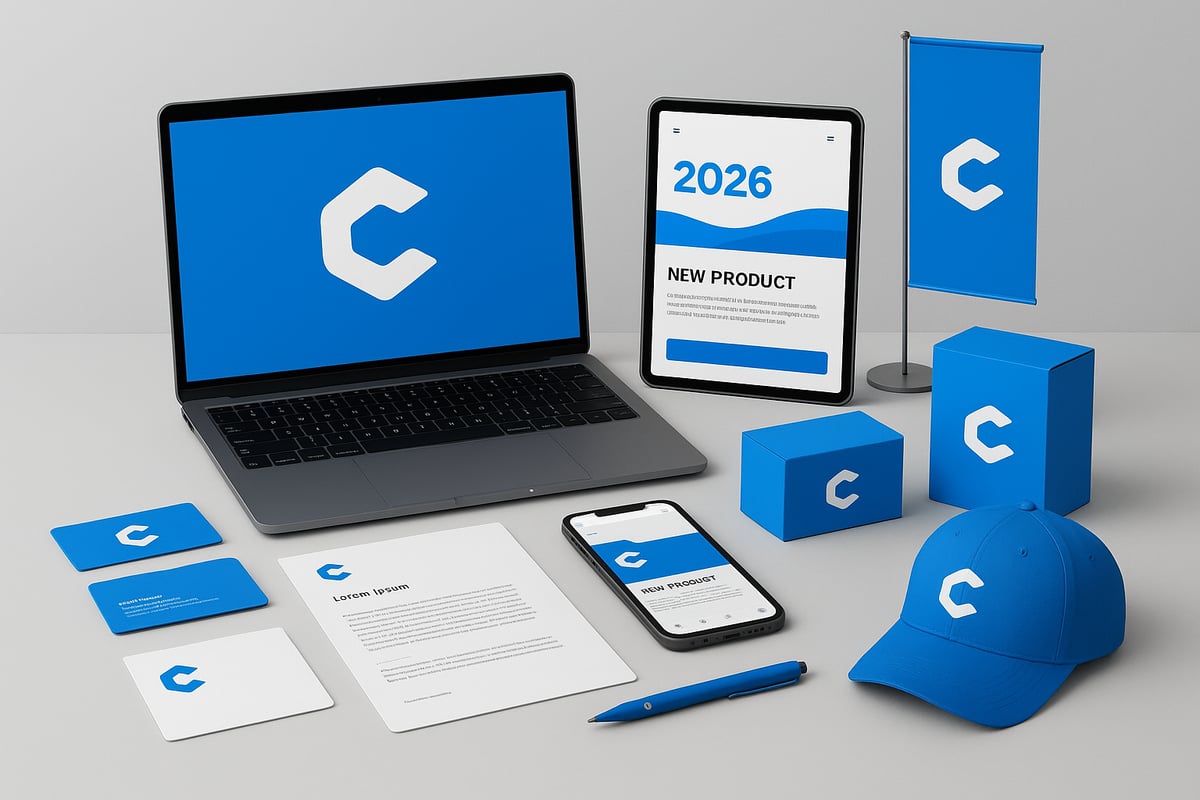
1. Logo Design
A logo is the visual cornerstone of your brand. In 2026, your logo must be scalable and adaptable for all digital and print uses. Simplicity is key, ensuring your logo remains clear and recognisable in any size or context.
Think of Nike’s swoosh—instantly identifiable across media. Modern branding materials often include animated or responsive logos for digital platforms, adding dynamism to your presence.
To keep your logo future-ready:
- Choose timeless shapes and fonts.
- Ensure legibility on all backgrounds.
- Test for scalability and clarity.
Data shows 75% of consumers recognise brands by their logo alone. For insights on the latest trends, see the Logo Design Trends 2026 guide. Consistency in logo use is vital across all branding materials.
2. Business Cards
Despite the digital shift, business cards remain a networking staple. In 2026, innovations like NFC-enabled and QR code cards enable instant digital connections, making them a modern essential in your suite of branding materials.
Design trends favour minimalist layouts, tactile finishes, and eco-friendly materials. Tech startups often use interactive business cards at events, leaving a memorable impression.
Tips for standout business cards:
- Use recycled paper or sustainable materials.
- Add a digital element for easy contact sharing.
- Keep information concise and design uncluttered.
A well-designed business card ensures your branding materials make a strong first impression, both physically and digitally.
3. Branded Website
Your website is your digital headquarters, the anchor of all branding materials. Essential features for 2026 include mobile optimisation, fast loading, accessibility, and strong SEO foundations.
Trends point to AI-driven chatbots, personalisation, and immersive UX. For example, e-commerce brands use AR for virtual product visualisation, enhancing engagement.
Best practices:
- Maintain consistent colours, fonts, and messaging.
- Ensure SSL certificates and privacy compliance.
- Focus on accessibility for all users.
Data reveals 94% of first impressions relate to design. For more, explore these essential website content tips. Integrate your branding materials seamlessly across every page for trust and recognition.
4. Social Media Graphics
A visually cohesive social presence is non-negotiable. Social media graphics unify your brand across channels like Instagram, LinkedIn, TikTok, Facebook, and X. In 2026, short-form video, interactive stories, and branded templates set the pace.
Brands using GIFs and stickers see higher engagement. Posts with images generate 650% more engagement than text-only updates, making these branding materials key drivers of visibility.
Tips for effective social media graphics:
- Stick to your brand colours and styles.
- Use templates for consistency.
- Incorporate video or animation where possible.
These branding materials ensure your brand stays top-of-mind and recognisable in crowded digital spaces.
5. Stationery Suite (Letterheads, Envelopes, Notepads)
Branded stationery is more than tradition—it’s a mark of professionalism in both external and internal communications. Digital letterheads and e-signature-ready templates are on the rise for 2026, streamlining workflows.
Consistency in design across letterheads, envelopes, and notepads reinforces your image. Law firms and consultancies often use branded stationery to build trust.
Modern trends include:
- Recycled paper and eco-friendly inks.
- Digital templates to reduce waste.
- Clean, minimalist layouts.
Investing in these branding materials demonstrates attention to detail and commitment to sustainability.
6. Email Signatures
Every email sent is a branding opportunity. Branded email signatures with clickable links, social icons, legal disclaimers, and dynamic banners are vital branding materials in 2026.
Standardise signatures across teams using signature management tools. Sales teams have reported up to a 32% increase in click-through rates with professional signatures.
Key features:
- Include a logo and contact details.
- Add promotional banners or event links.
- Ensure mobile compatibility.
Well-designed email signatures amplify your branding materials with every correspondence.
7. Brochures & Flyers
Brochures and flyers remain essential branding materials for events, sales, and product launches. Both print and digital formats are popular, with interactive PDFs, embedded videos, and AR elements gaining traction for 2026.
Real estate agencies, for example, use digital brochures for virtual tours. Tangible brochures provide detailed information and a physical connection to your brand.
Distribution tips:
- Hand out at events.
- Offer as downloadable PDFs.
- Use QR codes to bridge print and digital.
Crafting engaging brochures and flyers ensures your branding materials reach and resonate with your audience.
8. Packaging Design
Packaging is a silent ambassador for your brand. In 2026, eco-friendly materials, smart packaging with QR codes or AR, and minimalist designs are the top trends in branding materials.
Food brands stand out with unique packaging, drawing attention on shelves and online. Data shows 72% of consumers say packaging influences their purchase decisions.
Key considerations:
- Protect the product during shipping.
- Make unboxing memorable.
- Use recyclable or biodegradable materials.
Great packaging design elevates your branding materials and enhances customer experience.
9. Signage & Banners
Physical branding materials like signage and banners create real-world impact at shopfronts, events, and trade shows. Digital signage is increasingly popular, offering dynamic content and real-time updates.
Design tips:
- Ensure readability from a distance.
- Use brand colours and concise messaging.
- Opt for durable, sustainable materials.
For deeper insights, see Digital signage advertising strategies. Retailers boost foot traffic with striking window signage, demonstrating the value of these branding materials.
10. Apparel & Merchandise
Branded apparel and merchandise transform staff and customers into brand ambassadors. Items like uniforms, tote bags, mugs, and event giveaways are powerful branding materials for 2026.
Trends to watch:
- Sustainable fabrics and ethical sourcing.
- Limited-edition collections to drive demand.
- Personalised items for deeper connections.
Tech companies often foster community with exclusive branded merchandise. Data shows 85% of consumers remember the advertiser behind branded apparel, highlighting the long-term impact of these branding materials.
11. Presentation Templates
Consistent branding in presentations is vital for both internal and external communications. Branded templates with master slides, custom colour palettes, and icon sets streamline workflows and ensure professionalism.
Platforms like PowerPoint, Google Slides, and Canva are widely used. Agencies win more pitches with polished, on-brand decks.
Tips for success:
- Update templates regularly.
- Train teams on usage.
- Store centrally for easy access.
These branding materials help maintain a strong, unified identity in every meeting or pitch.
12. Promotional Materials & Giveaways
From pens and USB sticks to water bottles and notebooks, promotional materials extend your brand’s reach. In 2026, aligning giveaways with brand values and audience needs is essential.
Best practices:
- Choose items people will use daily.
- Include trackable QR codes for engagement analytics.
- Distribute at events, in mailouts, or as client gifts.
Financial firms, for example, use branded notebooks at conferences. Well-chosen promotional branding materials offer measurable ROI and lasting brand recall.
Integrating Branding Materials for Maximum Impact
Effectively integrating branding materials is essential for creating a unified, memorable brand experience. When every asset, from digital to print, works together seamlessly, your brand becomes instantly recognisable and trusted. Achieving this level of integration requires a strategic approach, careful planning, and the right tools.

The Power of Consistency Across Touchpoints
Consistency in branding materials is the cornerstone of brand recognition, trust, and customer loyalty. When your logo, colours, typography, and messaging are aligned across every channel, your audience instantly identifies your business, whether online or offline.
Leading global brands achieve this by implementing robust style guides and digital asset management systems. These tools ensure that every team member, regardless of location, uses the correct branding materials at all times. For example, a retail chain with multiple branches can maintain uniform signage, packaging, and digital content by relying on centralised brand guidelines.
Data shows that maintaining consistency in branding materials can boost revenue by up to 23 percent. However, challenges do arise, especially for businesses with remote teams or international locations. Overcoming these obstacles requires clear processes, frequent training, and easy access to approved assets.
For further guidance on aligning your digital channels and ensuring a unified brand image, explore Digital communications strategies for actionable tips and best practices. By prioritising consistency, you lay the foundation for sustainable brand growth and lasting customer relationships.
Measuring ROI of Branding Materials
Understanding the return on investment from your branding materials is crucial for justifying spend and refining your approach. Start by tracking key metrics such as brand awareness, engagement rates, lead generation, and sales uplift. Each branding material, from brochures to digital banners, can be measured using specific tools.
For print and physical assets, use QR codes or unique URLs to capture engagement data. For digital branding materials, rely on analytics platforms to monitor user interactions. For example, retailers can analyse footfall changes after updating their in-store signage, while service businesses can track increased enquiries following a refreshed website design.
Establishing feedback loops is essential. Regularly solicit input from both customers and team members to gauge the effectiveness of your branding materials. Benchmark your results against industry standards to identify areas for improvement.
Ultimately, ongoing optimisation ensures your investment continues to deliver value. By measuring, analysing, and adjusting your branding materials strategy, you create a cycle of continuous improvement that drives business growth.
Future Trends in Branding Materials
Looking ahead, branding materials are set to become more innovative and sustainable. Artificial intelligence now enables the creation of dynamic, personalised assets tailored to individual user preferences. Smart packaging, featuring interactive elements like AR and embedded chips, is quickly gaining traction. These advances create deeper engagement and set brands apart.
Sustainability is also a major differentiator. Biodegradable materials and carbon-neutral printing are becoming standard expectations from consumers. The rise of digital twins, where virtual versions of physical branding materials exist online, offers new ways to extend brand reach and monitor asset performance.
To stay ahead, regularly audit your branding materials, monitor emerging trends, and embrace new technologies. For inspiration and expert insight into what’s coming, review the latest Graphic Design Trends 2026. By preparing for new channels, such as voice, AR, and wearable tech, your brand will remain relevant and competitive in an ever-evolving landscape.